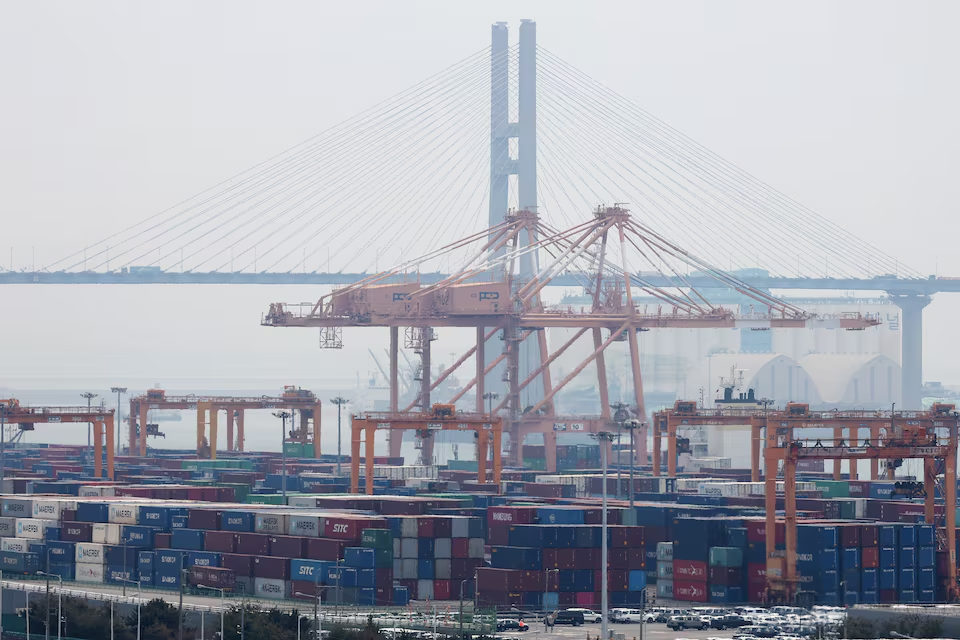
South Korea has become the fourth country in the world to record more than $1 trillion in annual exports, driven by surging global demand for artificial intelligence (AI) chips.
The country crossed the milestone at 5:09 a.m. GMT on Thursday, November 19, according to its trade ministry, surpassing its previous annual record of $709 billion set last year.
South Korea now joins Germany, the United States and China in the group of countries whose exports have exceeded $1 trillion.
The semiconductor industry has been the biggest driver of the export boom, benefiting from increased investment in AI infrastructure and the growing need for advanced chips used in data centres and computing systems.
In the first nine months of 2026, South Korea’s semiconductor exports jumped by 184 per cent year-on-year, accounting for 42 per cent of the country’s total exports. This was more than double the sector’s average contribution of about 20 per cent over the past five years.
The surge has benefited major chipmakers, including Samsung Electronics and SK Hynix, which are among the world’s leading producers of memory chips used in AI systems.
However, other traditional manufacturing industries, including automobiles, steel and shipbuilding, have struggled amid global trade protectionism, US tariffs and geopolitical tensions, including the Iran war.
See also: AI Boom Won’t Collapse Over Neocloud Debt -Samsung Tells Investors
President Lee Jae Myung welcomed the export milestone, saying the government would focus on turning the achievement into sustainable economic growth by strengthening major industries and developing emerging sectors such as AI and biotechnology.
In a post on X, Lee also said the gains from export growth should improve the living conditions of ordinary citizens, rather than benefit only large corporations and major economic centres.
Despite the record export performance, domestic demand remains weak, with many households yet to feel the impact of the boom. High interest rates, rising prices and volatility in the country’s stock market have weighed on consumer confidence.
To address the growing gap between export-driven industries and the wider economy, the Lee administration plans to establish a 162.3 trillion won ($121.94 billion) Future Response Fund.
The fund is expected to channel additional tax revenue generated by the semiconductor boom into growth industries, youth development, regional projects and education.
South Korea’s six major business groups also called for closer cooperation between government and private companies to ensure that export earnings translate into domestic investment, job creation and stronger regional economies.
The country’s economic growth is expected to accelerate to the mid-3 per cent range this year, following an expansion of just 1 per cent in 2025, as stronger AI-related exports and investment support economic activity.

About the Author
Cecilia Attah is a tech analyst with a degree from Benue State University. She covers tech news and startups at TechRegard with a focus on how technology is transforming Africa and shaping the global landscape.