US President Donald Trump has called on companies building data centres to provide financial benefits to host communities, saying such arrangements could help win public support for the facilities.
Trump made the call on Wednesday in a post on his Truth Social platform, noting that data centre projects that initially faced strong opposition had gained popularity after companies reached financial agreements with local communities.
“I have watched the process closely, and data centers that were highly unpopular in a certain area, have become extremely popular when a financial deal is struck,” he said.
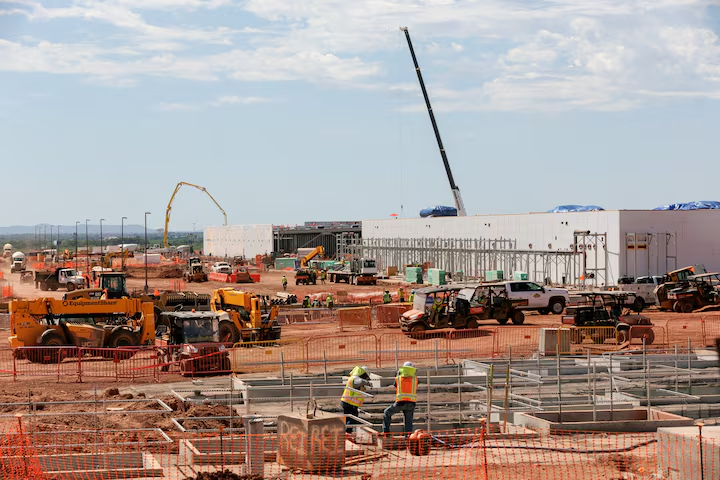
Data centres, which power artificial intelligence (AI) systems and other digital services, have become a growing source of controversy in communities across the United States because of their substantial electricity and water requirements.
Opposition to the facilities has attracted voters across political and ideological lines, putting pressure on the Trump administration, which has prioritised rapid AI development as part of efforts to strengthen US competitiveness against China.
Trump also said large data centres should generate their own electricity and make surplus power available to surrounding communities or the electricity grid.
See also: China Sets Up National Data Group to Challenge Global Tech Rivals
“New and large, in some cases gigantic, Data (centers) are mandated by me to make their own electricity, and give or sell any excess back to the local community, or grid,” he said.
In February, Trump said major technology companies should build their own power plants to supply their data centres, arguing that the arrangement would protect consumers from higher electricity bills.
The president’s latest comments come as technology companies face increasing scrutiny over the economic and environmental effects of the AI boom.
Anthropic, the company behind the Claude AI models, recently announced plans to commit five per cent of its shares to a new fund dedicated to the public good.
Meanwhile, Elon Musk said on Monday that he would give one SpaceX share to every child in the United States, outlining a plan to distribute some of the potential benefits of the expanding technology sector more directly to the public.

About the Author
Cecilia Attah is a tech analyst with a degree from Benue State University. She covers tech news and startups at TechRegard with a focus on how technology is transforming Africa and shaping the global landscape.