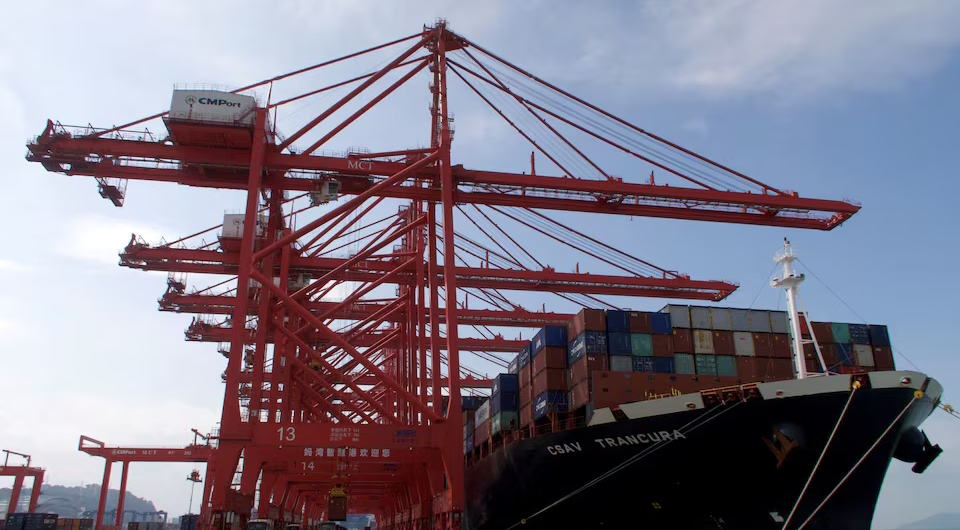
China is stepping up efforts to dominate the next generation of global shipping technology, using automated ports, artificial intelligence and digital logistics systems to strengthen its position in an industry responsible for moving more than 80 per cent of goods traded worldwide by volume.
Beijing is promoting smart-port infrastructure, including driverless trucks, remotely operated cranes and AI-powered systems, as it seeks to gain an advantage in global maritime trade and expand the reach of Chinese technology companies.
The ambition is expected to feature prominently at the Asia-Pacific Economic Cooperation summit scheduled to hold in Shenzhen on November 18 and 19, where world leaders are expected to see China’s growing investment in automated port operations.
One example is the Mawan Terminal in Shenzhen, where driverless trucks, remote-controlled cranes and artificial intelligence systems are being deployed to improve cargo handling and port operations.
China’s push, however, is raising concerns among Western officials and security analysts, who fear that Beijing’s growing influence over port infrastructure and shipping technology could give it strategic leverage over international trade.
Isaac Kardon, an expert on China’s maritime strategy at the US government-funded Institute for Defense Analyses, warned that dependence on Chinese technology could expose countries to significant risks.
He said Beijing could gain dominant positions in emerging technologies that might be used for economic coercion, while potential security vulnerabilities could allow it to monitor competitors or disrupt trade networks during a crisis.
China’s transport ministry has argued that digital transformation will determine the next phase of competition in the shipping industry.
In a May editorial published on its website, the ministry said countries that complete the digital transformation of their ports first would gain an advantage in the next round of global port and shipping competition.
Ahead of the APEC summit, China has also proposed leading working groups on electronic bills of lading, which are digital versions of traditional shipping documents, as well as customs databases powered by artificial intelligence and big data.
China says it is already ahead of other countries in port automation. Its transport ministry puts the number of automated terminals in the country at 60, more than any other nation, with a target of increasing the figure to 90 by 2030.
The New Qianwan Container Terminal in Qingdao, which the ministry describes as the world’s first fully automated terminal, is a major example of the country’s progress.
The terminal says its cranes can handle 61 containers an hour, more than twice the rate achieved at conventional docks, demonstrating how automation could improve the speed and efficiency of cargo movement.
The United States has been slower to adopt similar technology, partly because of opposition from labour unions concerned about potential job losses. A 2024 report by the US Government Accountability Office found that the country’s 10 largest ports were less automated than their foreign counterparts.
Kyle Chan, a fellow in Chinese technology at the Brookings Institution, said China’s rapid progress was partly linked to the absence of strong independent labour unions capable of slowing or blocking automation projects.
Beyond modernising its domestic ports, Beijing is using the infrastructure as a testing ground for technologies that Chinese companies can export to other countries.
Companies such as autonomous truck manufacturer Westwell and telecommunications equipment giant Huawei are developing and marketing smart-port solutions for international markets. Westwell’s driverless trucks are already operating at Felixstowe, Britain’s busiest container port.
China is also using its Belt and Road Initiative network to promote port technology in developing countries, offering equipment and infrastructure that it says can improve efficiency and strengthen trade links.
See also: Trump Confirms FBI Probe Into Nvidia CEO Over Alleged Chinese Spy Links
A March report by AidData, a research laboratory at William & Mary University in the United States, estimated that China had provided about $4.8bn in financing for port equipment across 69 ports in 47 countries since 2000.
That investment is separate from the $15.5bn Beijing has spent on building foreign ports or acquiring stakes in existing facilities.
While Chinese port equipment has gained international ground, the country’s efforts to expand its influence through shipping software have encountered greater resistance.
One setback was the quiet collapse of LOGINK, a China-backed shipping data platform that raised concerns in Washington over the possibility that Beijing could use it to track sensitive cargo, including military equipment, and give Chinese companies an advantage over Western competitors.
The United States pressured allies and international organisations to sever ties with the platform over security concerns.
China has also faced challenges in expanding its presence in the terminal operating systems market, which is dominated by US companies. The software is used to coordinate activities at container terminals, including cargo unloading, vehicle movement and customs processing.
China’s transport ministry said in May that reducing dependence on foreign providers of such systems would address a major weakness in the country’s port industry and save terminals tens of millions of dollars.
There are indications that Chinese companies are beginning to make progress. State-backed China Merchants Port said in a 2025 filing that it had completed a transport ministry project to replace foreign terminal operating systems at international ports by installing its domestically developed software at Brazil’s Paranagua port.
The company has also deployed the system at terminals in Sri Lanka, Greece, Italy and Turkey.
Wolfgang Lehmacher, a consultant and former head of supply chain and transport industries at the World Economic Forum, said China’s strategy involved sustained investments and pilot projects that could eventually develop into a wider network of influence over global supply chains.
He warned that Beijing’s growing presence across port infrastructure and logistics technology could ultimately translate into greater control over international supply chains.

About the Author
Cecilia Attah is a tech analyst with a degree from Benue State University. She covers tech news and startups at TechRegard with a focus on how technology is transforming Africa and shaping the global landscape.