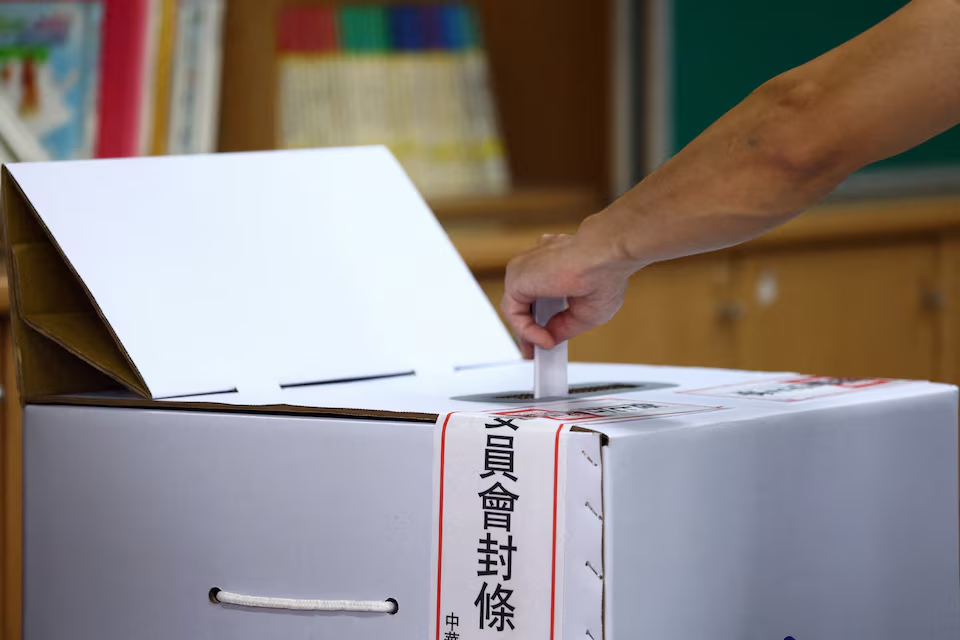
Taiwan has reported nearly 2,700 social media accounts to Meta, alleging that they are linked to a Chinese influence campaign aimed at shaping public opinion and discouraging voters ahead of local elections scheduled for November 28.
The accounts, most of them on Meta-owned Threads, were identified by Taiwanese officials as suspected tools for coordinated online operations intended to deepen political divisions and undermine confidence in the island’s democratic process.
According to Reuters, three Taiwanese government officials and internal security reports said the accounts appeared to have been created in batches, with nearly all opened within the past four months.
The November 28 elections for mayors and county chiefs are considered an important test of support for President Lai Ching-te’s Democratic Progressive Party (DPP) ahead of the 2028 presidential election.
China regards the DPP as a separatist political force and has refused to engage with the party. Beijing also claims Taiwan as part of its territory, although the island has its own democratically elected government and rejects China’s sovereignty claims.
Taiwanese officials said the suspected campaign was not necessarily designed to promote particular candidates but rather to create distrust, encourage political hostility and persuade people to stay away from polling stations.
“They don’t necessarily ask you to support certain candidates but they make people turn against each other, grow disgusted with democracy, choose not to vote, and they intensify election divisions,” one security official told Reuters.
An internal government report reviewed by Reuters showed that, of 2,400 Threads accounts flagged by Taiwan, 74 per cent listed China as their location, while about 25 per cent did not disclose a location and one per cent listed Russia.
See also: Indonesia Demands Answers as Google Takes Down 19,000 YouTube Channels
The report said the accounts were organised into 27 clusters, with similar Chinese-language names and different numerical identification codes, suggesting they had been created in batches.
Taiwanese investigators believe the accounts were operated from China or Russia, although the report described this as an assessment rather than a confirmed attribution.
Officials also said the accounts initially presented themselves as ordinary Taiwanese users by sharing content about everyday interests, including fortune-telling, apparently to build credibility and attract followers.
They would later shift to political discussions, criticising the government and attacking candidates before expressing disappointment with the ruling party and suggesting that people should abandon voting.
Taiwan also alerted Meta to about 260 accounts that allegedly distributed more than 2,150 AI-generated videos as part of the suspected influence campaign.
The videos reportedly attracted 2.35 million interactions, including comments and shares, with most targeting DPP politicians and government policies.
One prominent target was Puma Shen, the party’s high-profile candidate for mayor of Taipei. Some videos accused Shen of bullying during his school years, allegations he has denied.
Meta confirmed that it had removed the accounts reported by Taiwan, although it said many had already been disabled by its own systems.
A company spokesperson described them as “low-quality fake accounts” and said none had published election-related content. Most also had no followers, the spokesperson added.
Meta said it would continue taking action against accounts that violated its platform policies.
Taiwanese officials, however, said they had independently confirmed that some of the accounts were taken down.
An official from Taiwan’s National Security Council said China had used social media platforms and other channels to influence discussions around the island’s elections. Taipei would continue working with international partners and responsible technology companies to protect the electoral process from foreign interference, the official added.
China’s Taiwan Affairs Office did not respond to Reuters’ request for comment. Beijing has repeatedly rejected accusations that it interferes in Taiwan’s elections.
The latest case adds to concerns about the use of fake social media accounts and AI-generated content to influence political discussions, particularly ahead of elections. Taiwanese security officials say the suspected campaign is part of a wider effort to spread disinformation, amplify divisive narratives and weaken public trust in democratic institutions.

About the Author
Cecilia Attah is a tech analyst with a degree from Benue State University. She covers tech news and startups at TechRegard with a focus on how technology is transforming Africa and shaping the global landscape.