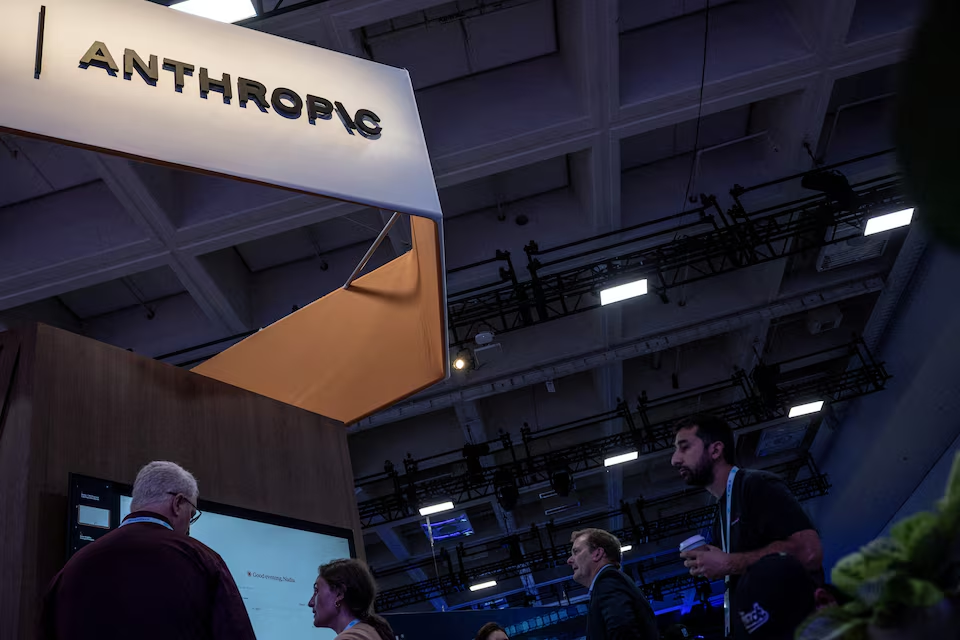
Artificial intelligence company Anthropic has asked a US appeals court to reconsider a ruling that upheld the Pentagon’s decision to designate it a national security supply chain risk, escalating its legal battle with the US government over restrictions on military use of its technology.
The company filed a petition on Tuesday with the US Court of Appeals in Washington, DC, challenging a September ruling that backed the Pentagon’s decision.
The dispute centres on Anthropic’s refusal to allow its artificial intelligence systems to be used in autonomous weapons and mass surveillance, restrictions the Pentagon argued could undermine military operations.
In a 2-1 decision in September, the appeals court upheld the designation, finding that the Defence Department had acted reasonably in response to the company’s safety restrictions. The court also rejected Anthropic’s claim that the Pentagon had retaliated against it because of its position on AI safety.
In its latest petition, Anthropic argued that the majority had misinterpreted federal law by extending a provision intended to address threats from hostile foreign actors to potentially cover any government contractor.
The company also accused the Pentagon of acting without giving it an opportunity to challenge the designation before it was imposed.
Anthropic argued that the decision amounted to retaliation for its public position on AI safety, saying the court had allowed the government to take action without a pre-designation process.
The designation has had significant commercial consequences for the company. Anthropic has said the Pentagon’s action has cost it billions of dollars in lost business.
See also: OpenAI to Add Invisible Watermarks to ChatGPT Text
The legal dispute has unfolded across multiple courts. In a separate case in August, a federal judge in California struck down a parallel Pentagon designation made under a different law, creating another legal challenge to the government’s actions against the company.
Anthropic chief executive Dario Amodei has advocated regulation covering all leading US AI developers, while President Donald Trump’s administration has favoured an approach focused on accelerating AI development and growth.
The case highlights the growing tension between the US government’s military AI ambitions and technology companies seeking limits on how their systems can be deployed, particularly in autonomous weapons and surveillance.
The appeals court’s response to Anthropic’s request could determine whether the earlier ruling is reconsidered, although the petition does not itself overturn the existing decision.

About the Author
Cecilia Attah is a tech analyst with a degree from Benue State University. She covers tech news and startups at TechRegard with a focus on how technology is transforming Africa and shaping the global landscape.