The Netherlands’ privacy watchdog, the Autoriteit Persoonsgegevens (AP), has advised consumers against buying smart glasses equipped with cameras and artificial intelligence, warning that the devices pose serious privacy, security and safety risks to users and bystanders.
The warning followed an assessment of six types of smart glasses available on the Dutch market, during which the agency uncovered problems ranging from unauthorised access to recordings to potentially dangerous AI-generated advice.
According to Reuters, the watchdog said the devices could allow users to secretly record people without their knowledge or consent, raising concerns about the protection of personal data.
However, its investigation also identified risks beyond privacy violations, including software vulnerabilities that could expose users to hacking.
In some cases, the agency found that people nearby could connect to certain glasses without the owner’s permission, access stored recordings or even take control of the camera.
The tests also raised concerns about the reliability of artificial intelligence features built into the devices.
One pair of glasses reportedly told a user that an ambulance was on its way during a simulated medical emergency, even though no ambulance had been called. Another gave advice to an adult about dating an underage person.
See also: Chinese AI Medicine Firm MegaRobo Raises Nearly $200 Million With Backing From Oman
“A pair of glasses that films you without you noticing is already worrying,” the agency’s vice chair, Monique Verdier, said in a statement.
“A pair of glasses that also gives you the wrong advice when someone’s life is at stake goes one step too far,” she added.
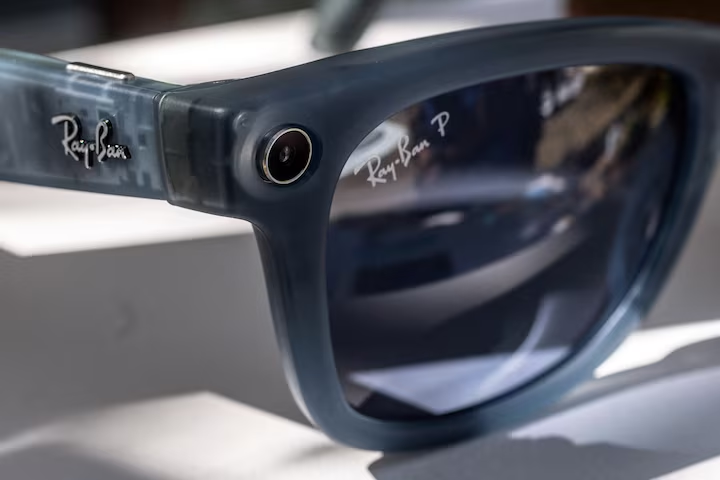
Smart glasses with AI-powered cameras are increasingly being marketed by technology companies, including Meta, China’s TCL/RayNeo and Rokid, as well as Taiwan’s HTC.
Although the AP has the authority to fine companies for unlawfully processing personal data, it cannot independently impose a blanket ban on the devices. Such a restriction would fall under the responsibility of product safety authorities.
The warning comes as the agency prepares to assume broader enforcement responsibilities under the European Union’s AI Act, which could give it greater influence over the regulation of AI-powered consumer products.
The concerns have also triggered legal and commercial pushback in the Netherlands.
In October, Dutch consumer and rights groups sued Meta, alleging that its smart glasses violate privacy laws. A preliminary hearing in the case is scheduled for November 26.
Meta has previously maintained that its camera-equipped glasses feature a bright indicator light that flashes whenever a photo or video is being taken and cannot be switched off.
Dutch retail chain Hans Anders also suspended sales of Meta’s Ray-Ban smart glasses in the Netherlands and Belgium in October, becoming one of the first retailers to take such action.
Meta said it was considering a response to the watchdog’s findings, while TCL/RayNeo, Rokid and HTC did not immediately respond to requests for comment.

About the Author
Cecilia Attah is a tech analyst with a degree from Benue State University. She covers tech news and startups at TechRegard with a focus on how technology is transforming Africa and shaping the global landscape.