The Philippines has moved closer to restricting children’s access to social media after the country’s House of Representatives approved a bill seeking to ban users under 13 from accessing the platforms.
The measure, approved overwhelmingly on Monday, follows the Senate’s endorsement of a separate bill aimed at limiting minors’ use of social media, amid growing concerns about children’s online safety and the effects of digital platforms on young users.
The two chambers must reconcile differences between their versions of the legislation before submitting a final bill to President Ferdinand Marcos Jr for approval.
However, the Senate’s version is stricter, proposing to prohibit anyone under 18 from creating social media accounts, compared with the lower house bill’s proposed restriction on children under 13.
Marcos said on Sunday that he had been studying the Senate-approved proposal, warning that a blanket ban could lead children to conceal their online activities and leave them more vulnerable to grooming and abuse.
The legislative push comes amid renewed debate over the influence of social media and online content on young people following three school shootings in the Philippines since June.
In September, a 16-year-old student reportedly shot dead at least two fellow students before taking his own life. In August, another student livestreamed himself shooting and killing a classmate before dying by suicide.
Gun violence in Philippine schools had previously been rare, and the incidents have intensified discussions about child safety, online content and the possible links between digital platforms and harmful behaviour.
The proposed restrictions also place the Philippines among a growing number of countries seeking to limit minors’ access to social media as governments grapple with concerns about online abuse, children’s wellbeing and exposure to harmful content.
Australia, Malaysia, Indonesia, Greece and Portugal are among the countries that have pursued or considered measures to restrict children’s use of social media.
See also: After Uber’s Exit, Moove Quits Nigeria and Hands Drivers ₦35bn in Cars
Malaysia began barring children under 16 from registering accounts on social media platforms in June and has required platforms to verify users’ ages against government-issued records. Companies have until January 2027 to implement the measure.
Indonesia, meanwhile, introduced a regulation in March requiring platforms designated as high-risk to deactivate accounts belonging to children under 16. The affected services have included X, Instagram and the video game platform Roblox.
As of last week, TikTok had deactivated about nine million accounts belonging to under-16s in Indonesia, while Meta had blocked 85,000 Instagram accounts and 99,000 Facebook accounts.
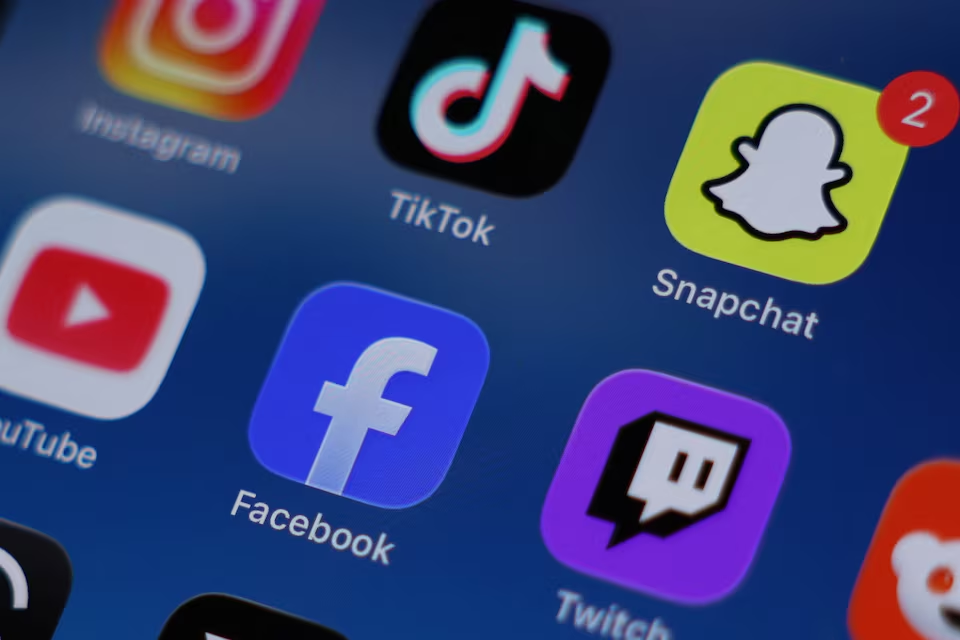
The Philippine proposal could have significant implications for major social media companies, including TikTok, YouTube, Facebook and Instagram, if the legislation becomes law.
TikTok, Google parent Alphabet and Meta Platforms, which owns Facebook and Instagram, did not immediately respond to separate requests for comment on the lower house’s approval.
The final scope of the restrictions will depend on the outcome of negotiations between the two chambers and the version eventually presented to the president.
The debate highlights the challenge facing governments as they seek to protect children online while addressing concerns that strict restrictions could push young users towards hidden accounts or less visible online spaces.

About the Author
Cecilia Attah is a tech analyst with a degree from Benue State University. She covers tech news and startups at TechRegard with a focus on how technology is transforming Africa and shaping the global landscape.